The client came to German Kitchen Design through a recommendation from a friend, who suggested our range of materials might offer what others could not. The client had already explored the full breadth of the market, from local contractors to high-end Italian design, and met the same compromise at every turn: kitchens that were durable but not beautiful, or beautiful but not durable.
Wood was central to the vision. The client’s parents love natural wood, and the family wanted the home to feel connected to the nature around it. Solid wood, however, cannot tolerate the water and heat of a working kitchen, and anything glossy or gold was ruled out from the start.
A key requirement was longevity. For the client, a kitchen is something a family lives with for twenty or thirty years, making it an investment rather than a short-term purchase. It is a view German Kitchen Design shares, and one reason our kitchens are backed by a 15-year warranty on moving parts, fronts and cabinets.
Consultation & Showroom Selection
The design process began at our River City showroom. Rather than relying on drawings alone, the client wanted to see and use a finished kitchen, down to how the drawers pulled and how smoothly the doors closed. One of the showroom’s display kitchens became the starting point, and a second visit with the client’s parents, who loved it immediately, cemented the choice.
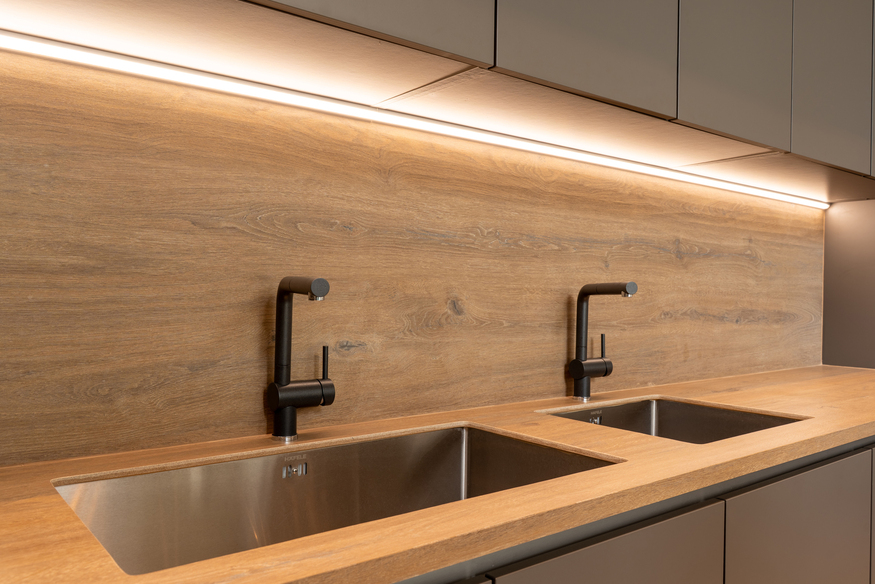
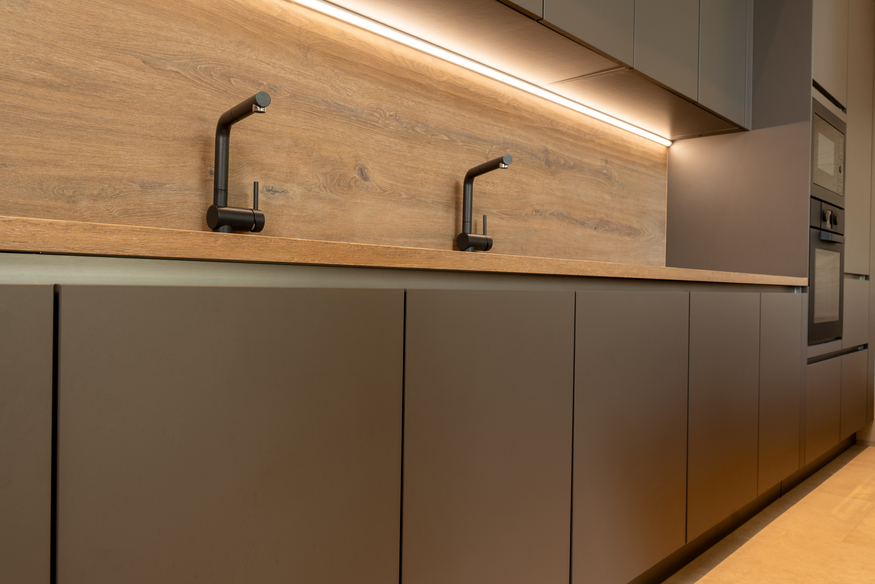
The client had in fact ruled out its worktop at first, believing the surface to be real wood and therefore unsuitable for a kitchen. Our team explained that it is a porcelain made to reproduce the grain of oak, one that stands up to heat and water, going on to become the defining material of the project.
Working from plans prepared by the client’s interior designer, our team assessed what would and would not work in the space and adapted the design accordingly. 3D renderings and a walkthrough video allowed the client to review colors and laminate fronts before anything was manufactured.
Design Concepts
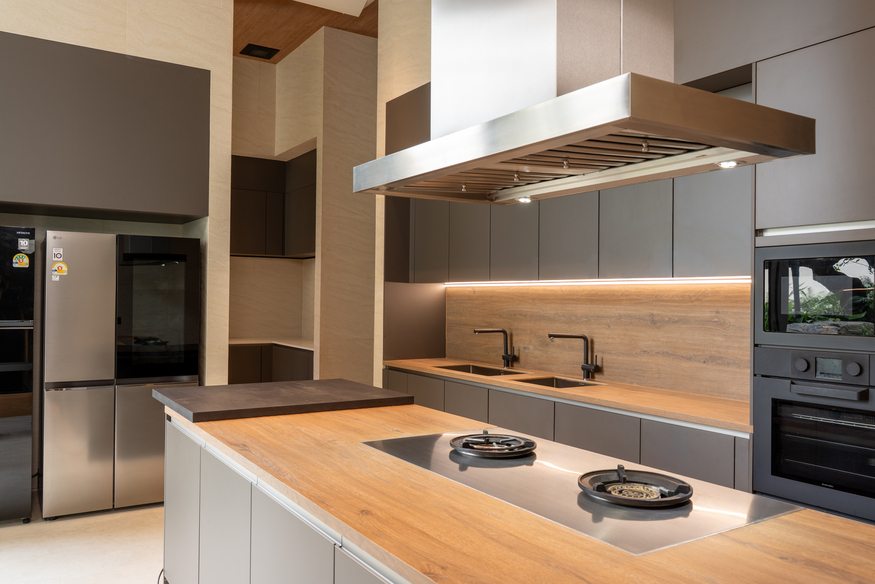
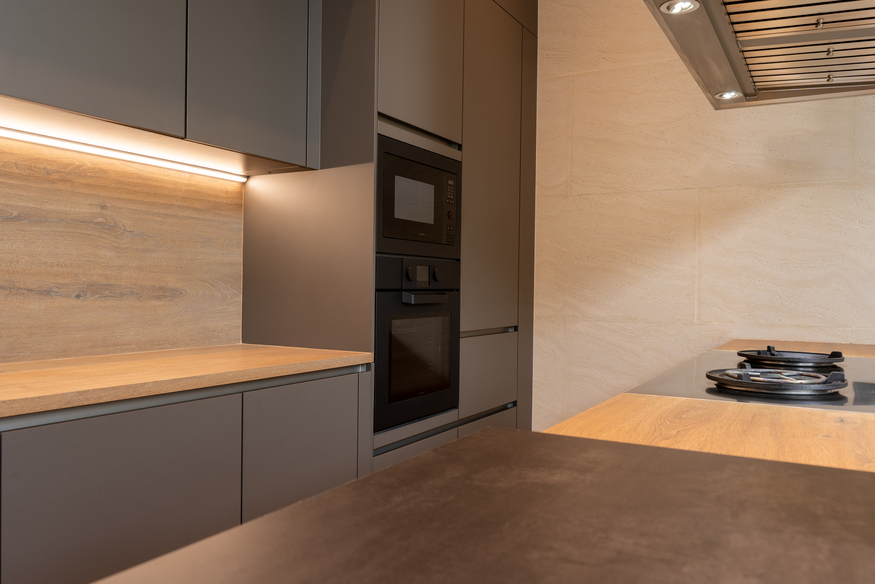
The layout was shaped around Thai cooking. The client had chosen a high-output gas hob, as Western hobs rarely deliver the heat that stir-frying requires, and every surrounding cabinet was built to accommodate its dimensions.
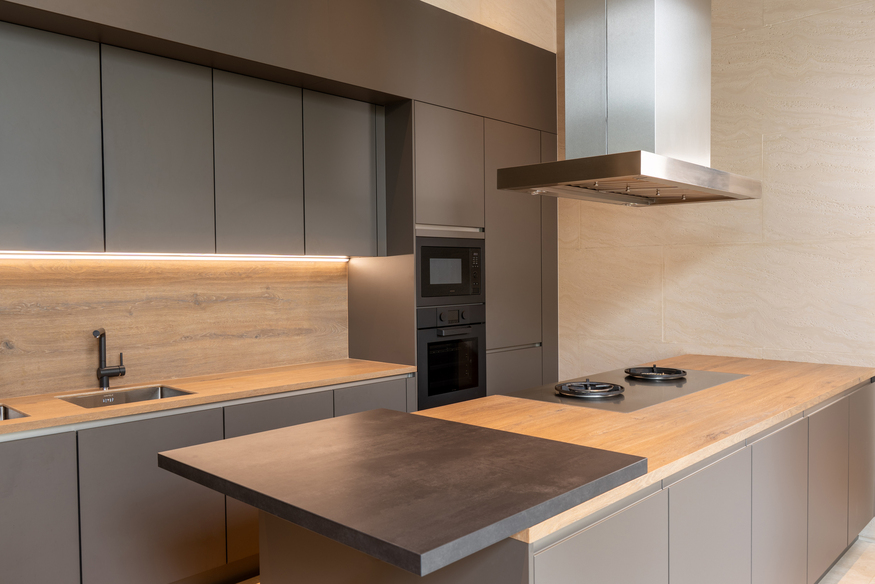
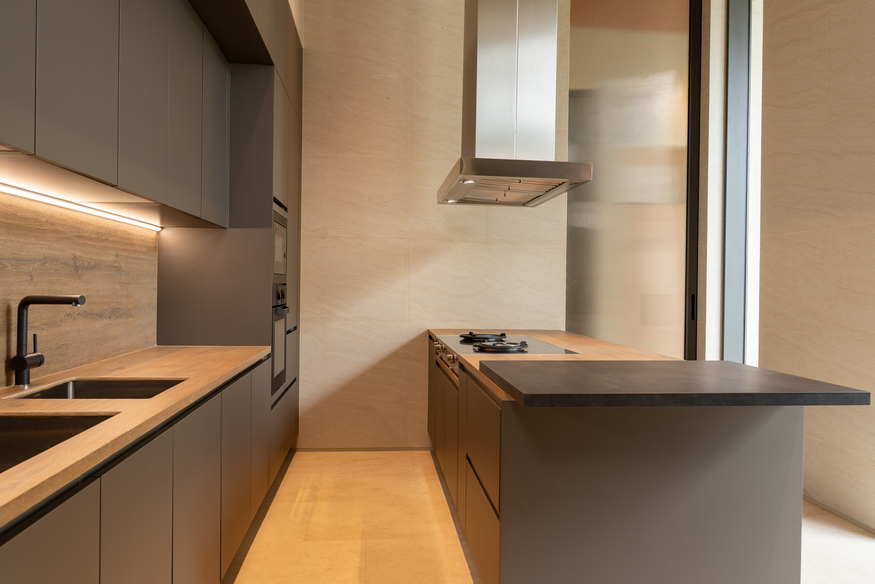
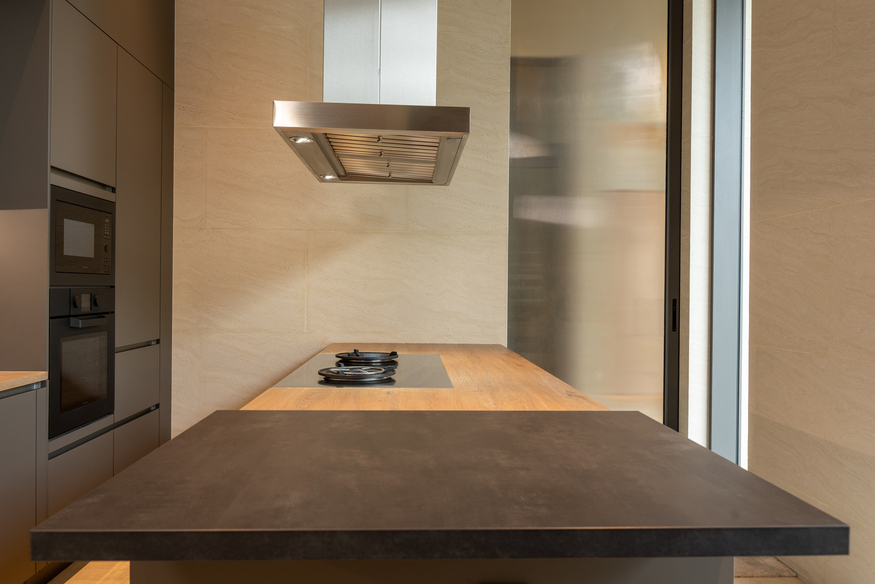
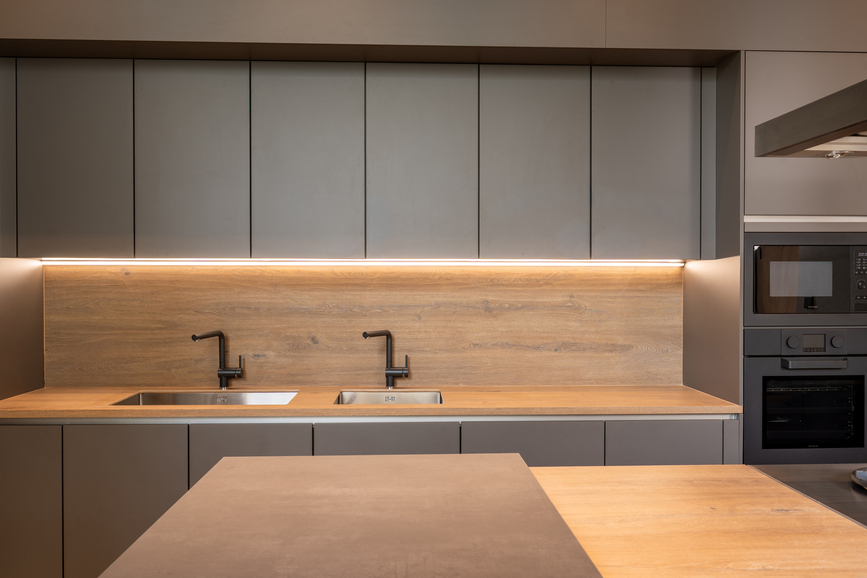
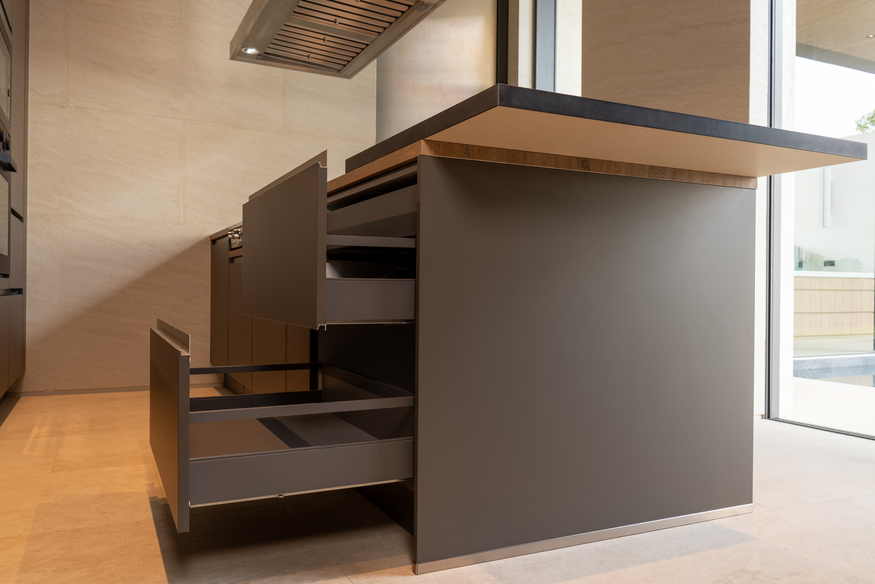
The original plan placed the hob on an island with walkways on both sides. With the large hob taking up most of the surface, little room remained for preparing food. Working through the options with our team, the client chose to close off one end of the island against the wall, so that the island and the wall cabinets form a galley. The layout trades a slightly longer walk for generous worktop space on either side of the hob, while a black concrete bar top at the island’s open end gives guests somewhere to gather while the cooking goes on.
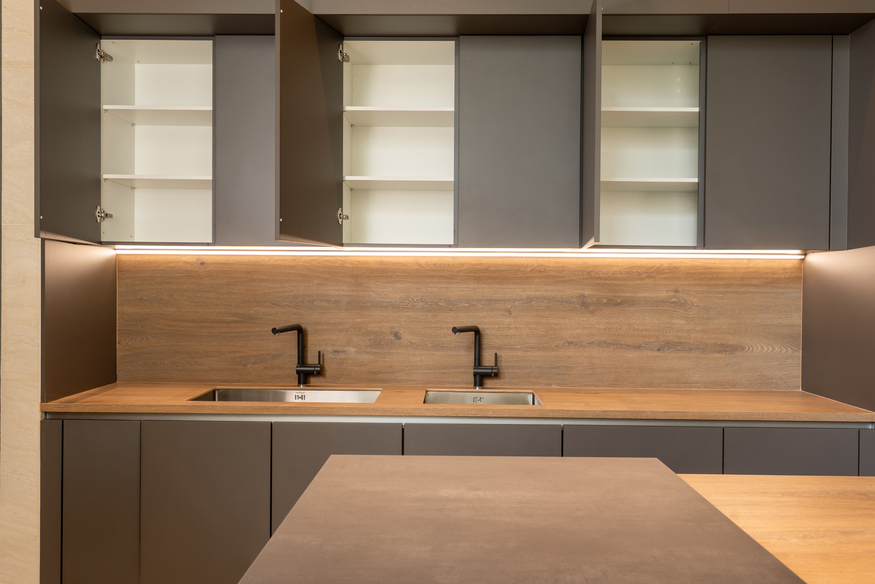
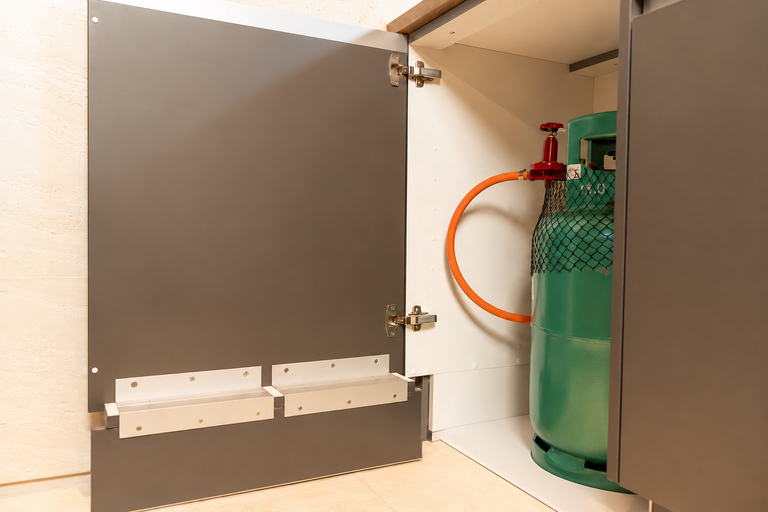
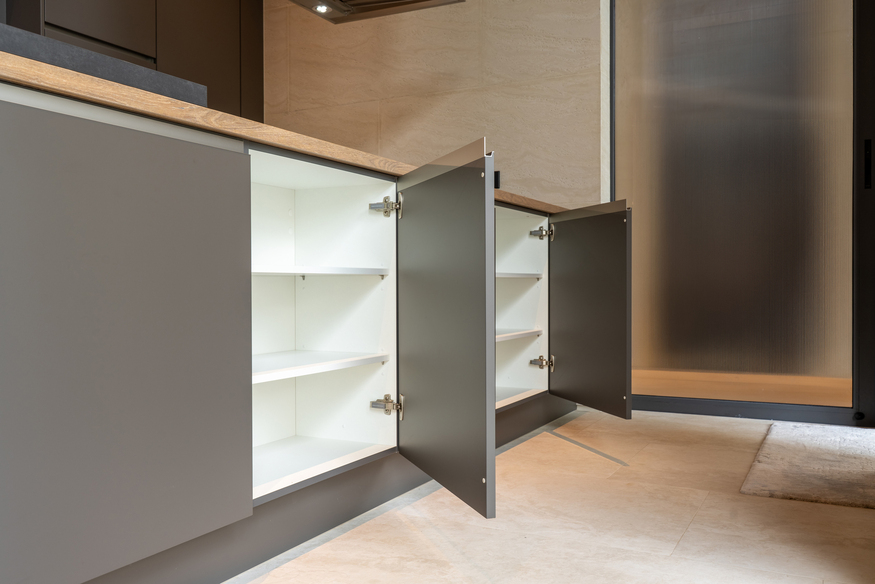
Practical details were designed to stay out of sight. A dedicated cabinet lets the gas cylinder roll straight in at floor level, with the shelf removed and the plinth opening together with the door, all behind a front that matches the rest of the kitchen. For the client’s preferred double-door cabinets, our team advised that the wide fronts could sag under their own weight and adjusted the proportions so the doors would perform as intended.
Material Selection
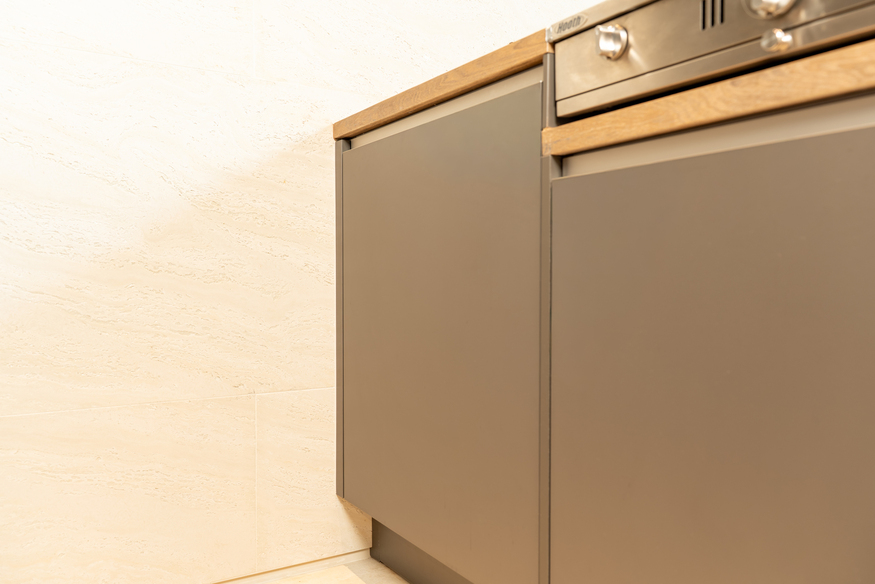
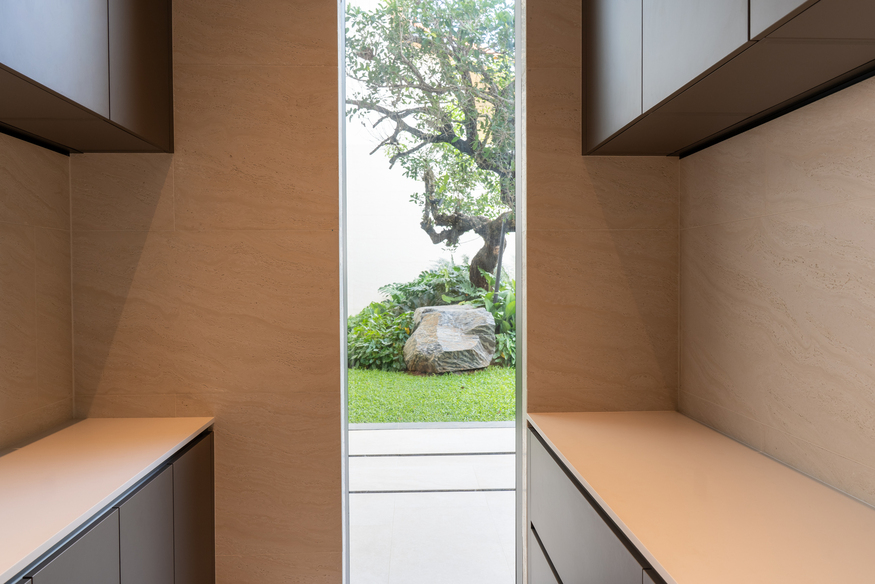
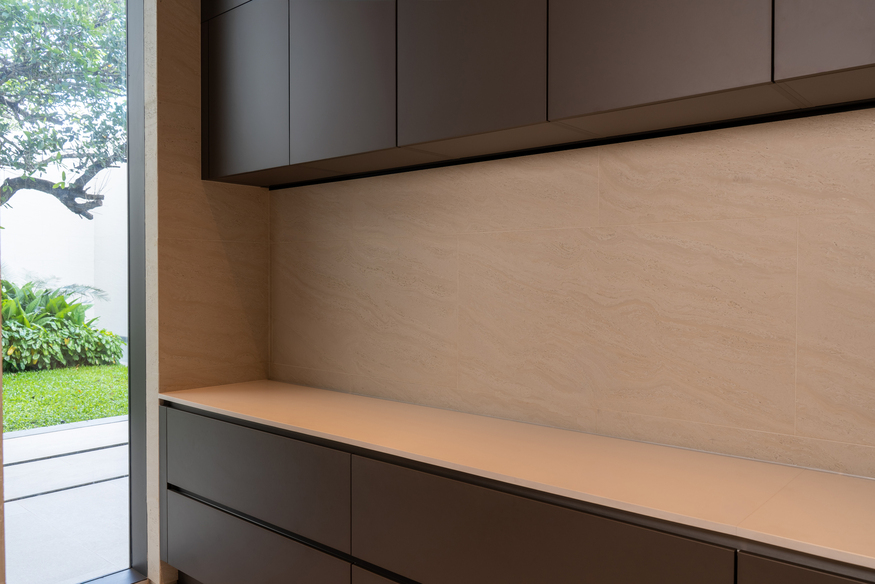
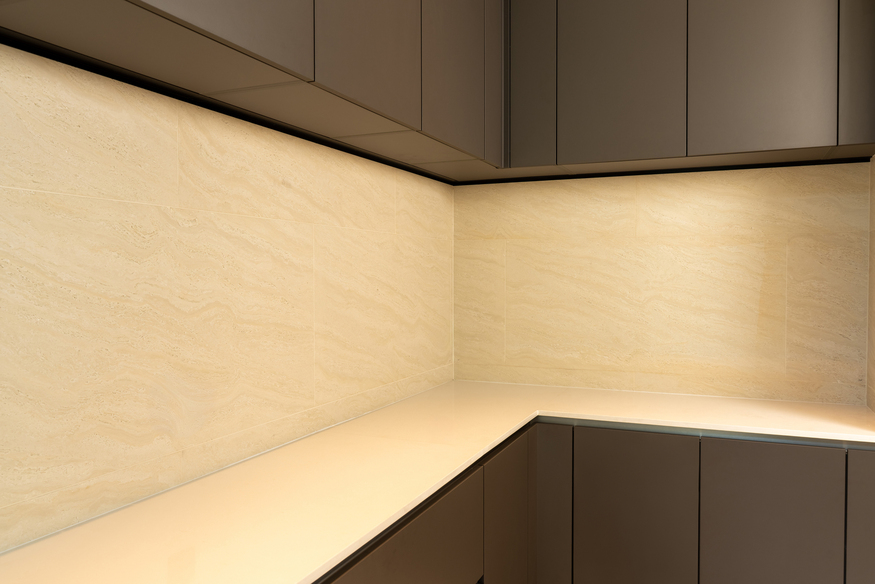
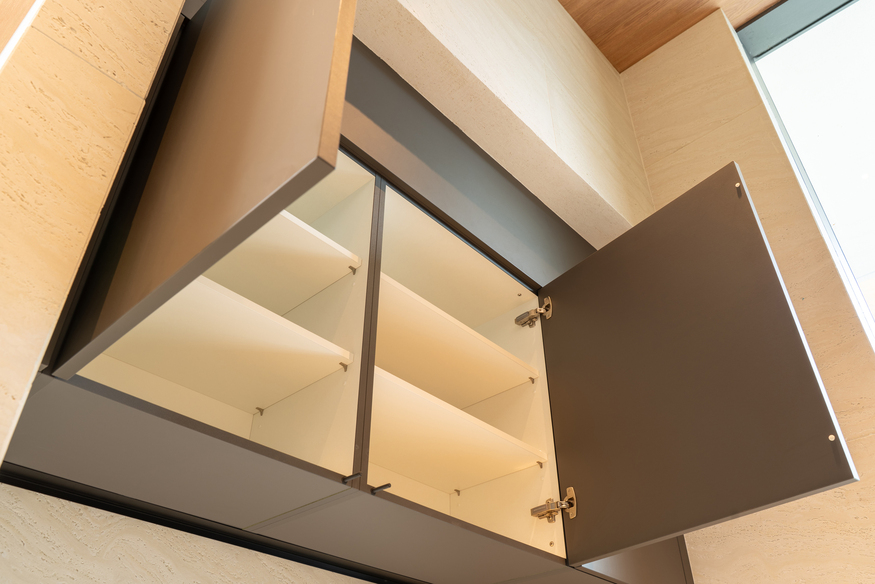
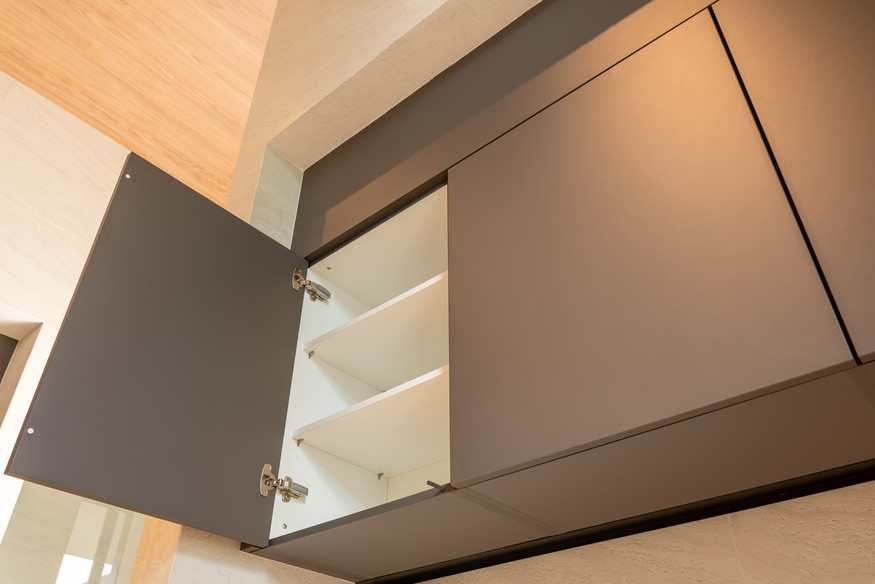
To deliver the character of wood without its fragility, the kitchen pairs LASER fronts in matte volcanic grey with a Sapienstone Rovere Baio porcelain worktop and backsplash, a surface that captures the grain of oak while resisting water, heat and everyday wear. A black concrete reproduction bar top adds contrast, and the adjoining counters are finished in TM Marble Pure White quartz. Together, these matte, natural tones steer clear of the gloss and gold the client disliked, allowing the kitchen to sit comfortably within its Khao Yai surroundings.
Manufactured in Germany, the kitchen was shipped to Thailand and installed by our team. Because the client had chosen the appliances and sinks before the design began, every cabinet and cut-out was made to accommodate their dimensions, so each piece sat where it was planned.
Months later, the client reports that the kitchen has performed without issue, and that the balance of quality and value made recommending German Kitchen Design an easy decision.
“I wouldn’t hesitate to recommend German Kitchen Design. A kitchen stays with you for twenty or thirty years, so I felt it was worth investing in, and I’m happy with the price point for this quality.” – Khun Soravis (Man) Srinawakoon